AI Literacy, Performance Enablement, and Capability Development
Closing the AI Capability Gap
A blended microlearning experience that turned available AI tools into practical, confident workplace capability.
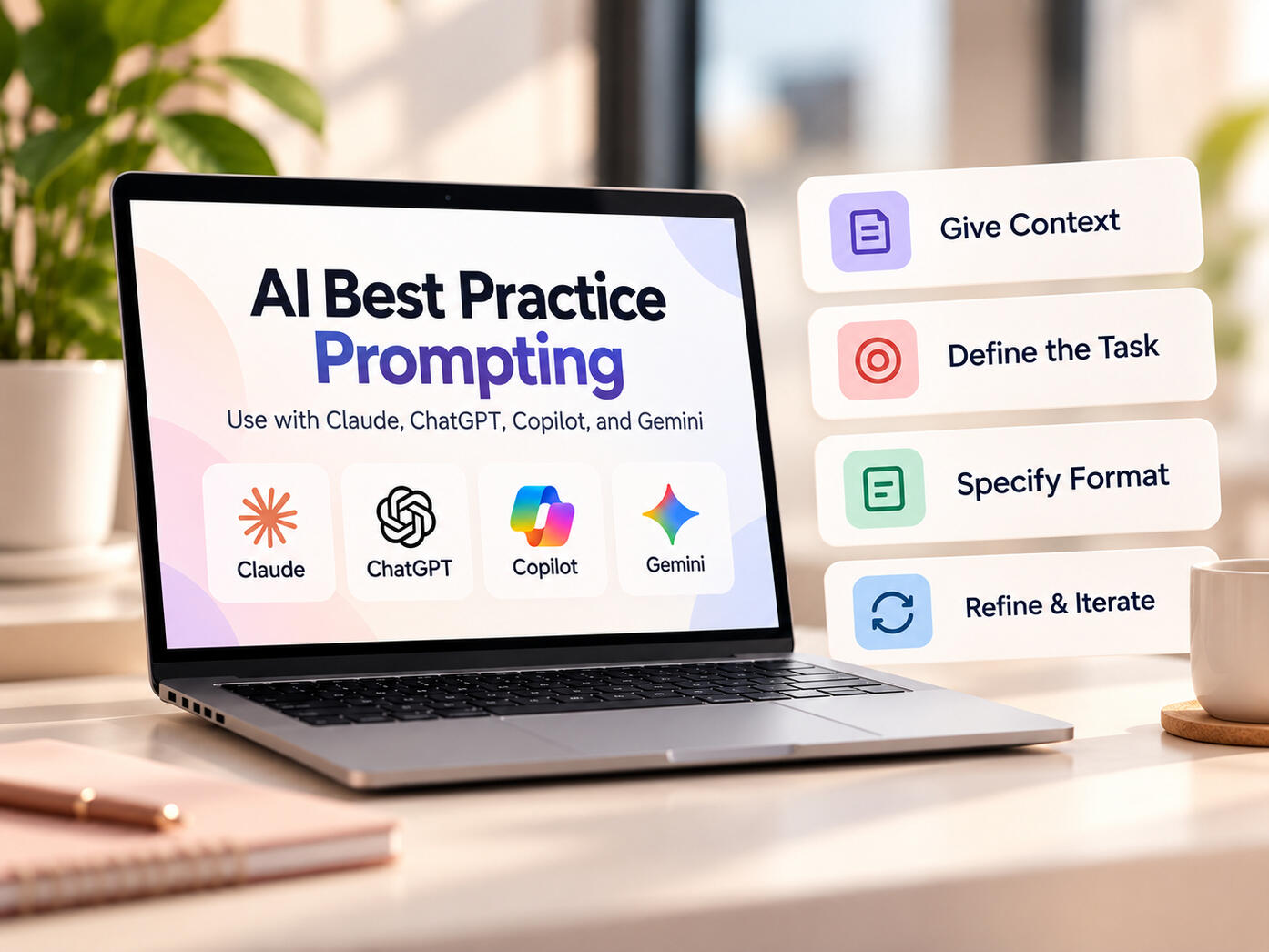
Project overview
Providing employees with generative AI tools does not automatically establish the competencies required to use them effectively. This initiative addressed an emerging capability gap by introducing practical prompting methodologies designed to improve the relevance, consistency, and usefulness of AI-generated outputs.
The challenge
Although AI tools were available to my team, the quality of generated responses varied. Some colleagues approached AI as the source of the answer without fully recognizing how prompt structure, contextual information, and clearly defined expectations influenced the output.
My role
I identified the capability gap and designed, developed, and facilitated an AI enablement experience for approximately 20 colleagues.
My approach
- Developed a blended microlearning experience combining concise instructional content with facilitated application.
- An introductory explainer video established foundational prompting concepts, while a live workshop examined authentic workplace scenarios and compared vague and structured prompts.
- A follow-up video served as a performance support resource, reinforcing context, task definition, output requirements, and refinement.
- Designed intentionally to minimize time away from work while maximizing immediate application.
Outcomes
- Approximately 20 colleagues participated and were introduced to structured prompting techniques applicable across everyday workflows.
- Established a practical foundation for continued AI skill development and reinforced the relationship between prompt quality, human judgment, and effective AI utilization.
AI adoption is constrained less by access than by capability and confidence. Short, practice-based interventions can close that gap quickly and at scale.