Learning Technology, Change Management, and AI Enablement
LMS Migration to Sana: A New LMS & AI-Powered Authoring Platform
Migrating an established content library into an AI-powered learning ecosystem without disrupting learners or production velocity.
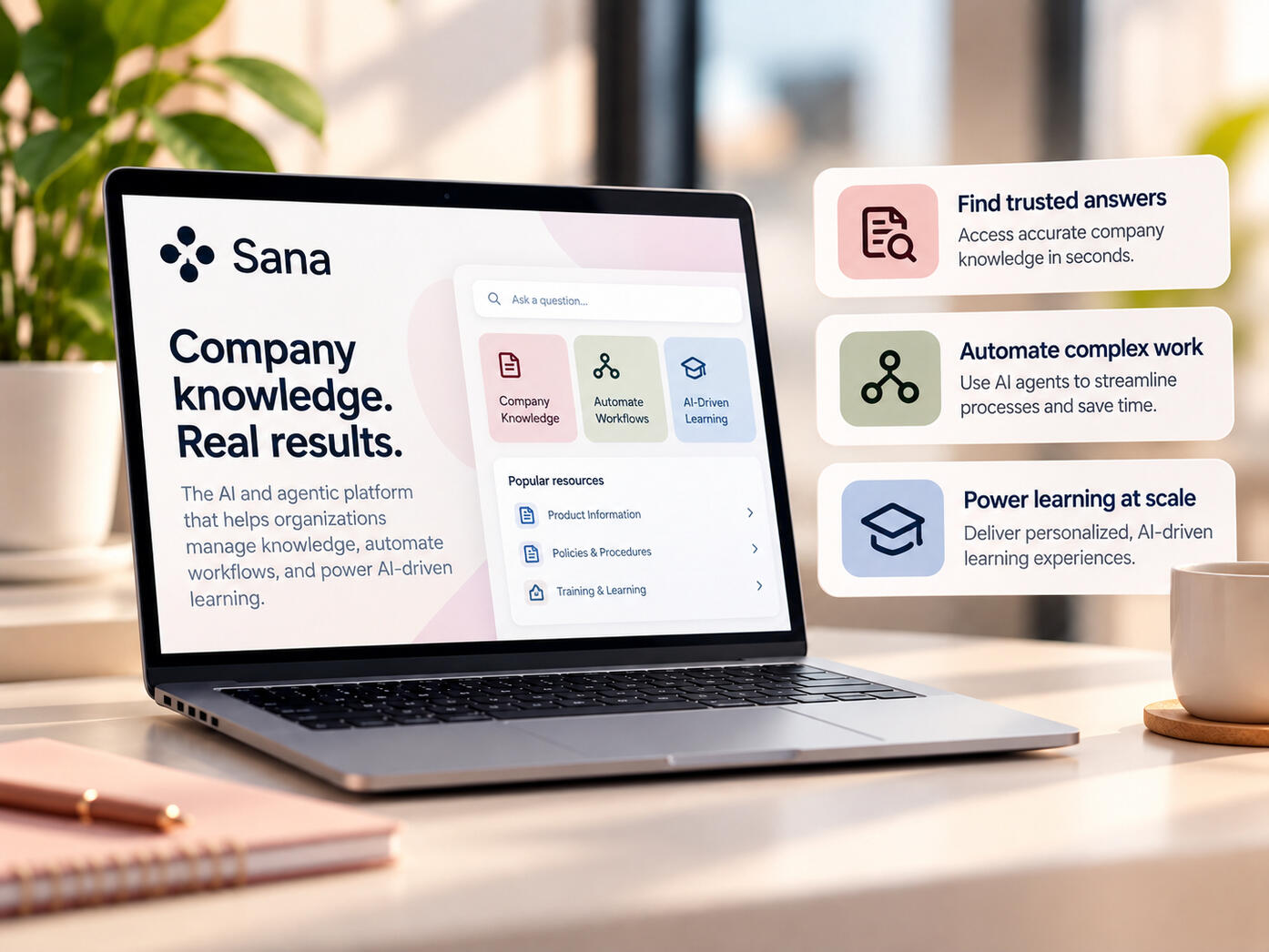
Project overview
Platform transitions succeed or fail on adoption, not configuration. This initiative introduced Sana as the organization’s learning management system and AI-powered authoring environment, requiring careful attention to content continuity, workflow redesign, and the experience of both learning developers and end learners.
The challenge
The organization needed to migrate an established content library and development process into a new ecosystem without disrupting learner access or production velocity, while validating whether the platform’s authoring and AI capabilities could meaningfully streamline the learning development lifecycle.
My role
I evaluated Sana’s integrated learning and authoring capabilities through the lens of instructional effectiveness, developer experience, and learner accessibility. Through content migration and learning path configuration, I explored how existing learning assets could transition into the new environment while identifying opportunities to improve content organization and development workflows. I also developed best practices for integrating AI Tutor functionality into eLearning content.
My approach
- Evaluated the platform across the full design-to-delivery continuum: native authoring, interactivity and assessment design, virtual session management, and AI tutor functionality.
- Assessed each capability through two lenses: developer efficiency and learner experience.
- Migrated legacy content iteratively to identify where content translated cleanly, where it needed redesign, and where native features could replace manual workflows.
Outcomes
- Migrated more than 100 SCORM assets into Sana and restructured them into cohesive programs and learning paths.
- Established best practices for integrating AI Tutor functionality into eLearning, giving the team a repeatable approach.
- Clarified which legacy content could transition as-is, which needed redesign, and where native features replaced manual workflows.
Technology adoption is a change management discipline. Sustainable implementation depends on understanding user workflows, redesigning processes intentionally, and building learner and developer confidence alongside the platform itself.